Quantum Computing and Blockchain
How Bitcoin, Ethereum, and Web3 Are Preparing for the Future?
Why the Next Evolution of Blockchain Security Is Already Underway
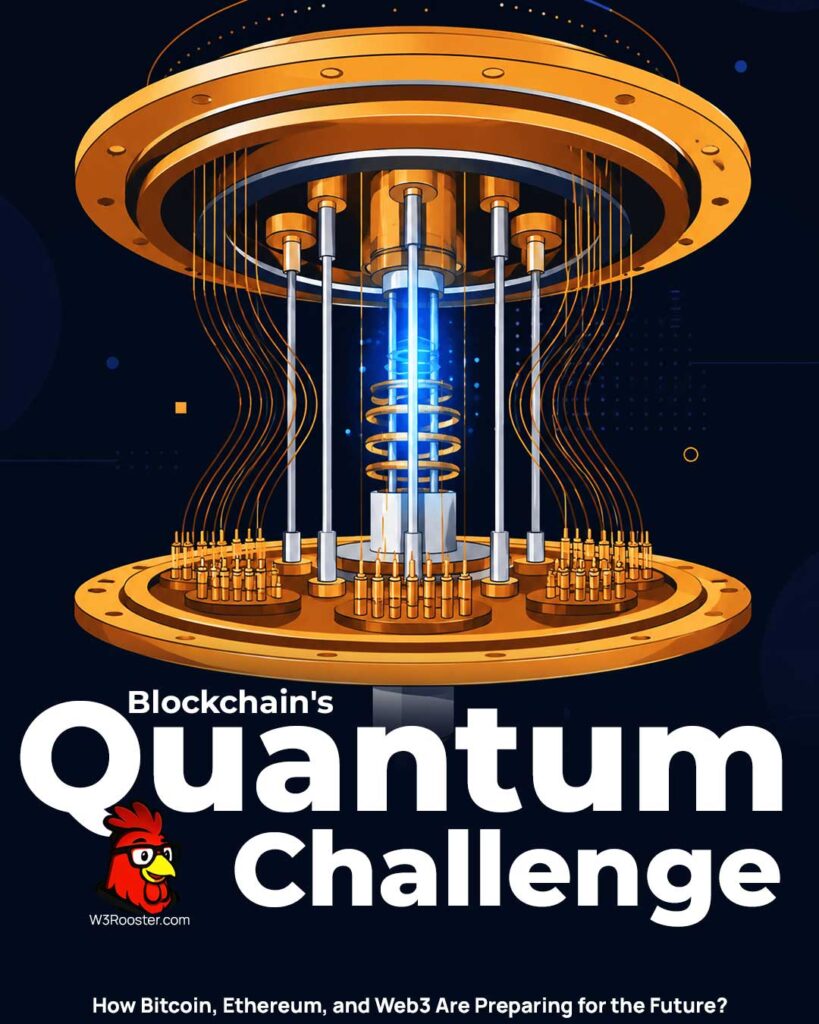
W3Rooster: Blockchain technology was designed around one fundamental principle: trust without intermediaries. Instead of relying on banks, governments, or centralized organizations to verify ownership and transactions, blockchain networks use cryptography to create secure, decentralized systems that anyone can participate in.
Every cryptocurrency transaction, smart contract execution, decentralized application (dApp), and digital asset ultimately depends on cryptographic security. Without it, decentralized ownership could not exist, and blockchain networks would lose the trust that makes them valuable.
As quantum computing continues to advance, blockchain developers and researchers are increasingly examining how these cryptographic foundations can evolve for the future.
Although practical quantum computers capable of threatening today’s blockchain cryptography do not yet exist, preparations are already underway. Across Bitcoin, Ethereum, and the broader Web3 ecosystem, the focus is not on responding to an immediate crisis but on ensuring decentralized networks remain secure for decades to come.
Why Quantum Computing Matters to Blockchain
Unlike traditional financial systems, blockchain networks rely almost entirely on cryptography to establish trust.
Every wallet address, digital signature, transaction, and ownership record depends on mathematical algorithms that have proven highly secure against today’s classical computers. These algorithms allow users to control digital assets without revealing their private keys while enabling every node on the network to verify transactions independently.
Quantum computing introduces a new long-term consideration.
Instead of processing information solely through binary calculations, quantum computers leverage the principles of quantum mechanics to solve certain mathematical problems much more efficiently than conventional machines. Researchers continue studying how sufficiently advanced quantum computers could eventually affect some of the cryptographic algorithms currently used across blockchain ecosystems.
This does not mean that existing blockchain networks are suddenly insecure or that cryptocurrencies face an imminent threat. Rather, it highlights why developers are already exploring quantum-resistant cryptographic techniques that can preserve decentralized trust as computing technology evolves.
Bitcoin: Preparing Digital Money for the Quantum Era
Bitcoin is often the first blockchain discussed when quantum security is mentioned. Unlike traditional banking systems that rely on usernames, passwords, and centralized account management, Bitcoin ownership is controlled through cryptographic key pairs. Users authorize transactions by generating digital signatures with their private keys, while the network verifies those signatures without exposing the private keys themselves.
This architecture has protected the Bitcoin network since its launch.
Today, deriving a private key from publicly available information remains computationally impractical using classical computers. Nevertheless, researchers continue evaluating how future quantum computers might influence the cryptographic assumptions underlying this model. The discussion therefore centers on long-term preparation rather than immediate vulnerability.
Several important questions are already being explored:
- Could Bitcoin eventually adopt quantum-resistant digital signatures?
- How could millions of wallet holders migrate safely to updated cryptographic standards?
- How might such changes be implemented while preserving Bitcoin’s decentralized governance model?
Bitcoin has repeatedly demonstrated that it can evolve through carefully coordinated consensus upgrades. If quantum-resistant cryptography eventually becomes necessary, it will likely represent another milestone in Bitcoin’s ongoing technical evolution rather than an emergency response.
Ethereum: Protecting an Entire Application Ecosystem
Ethereum presents an even broader challenge because it is far more than a digital currency. The network supports decentralized finance (DeFi), tokenized assets, NFTs, decentralized exchanges, gaming platforms, identity systems, and thousands of decentralized applications operating through smart contracts.
Every one of these applications relies on cryptographic verification.
Smart contracts automatically execute predefined instructions without requiring centralized oversight. Digital wallets authenticate users, decentralized applications verify transactions, and blockchain protocols maintain consensus through cryptographic mechanisms.
As Ethereum’s ecosystem continues expanding, developers are increasingly considering how future quantum-resistant technologies can be integrated without disrupting existing applications or compromising decentralization.
Unlike traditional software updates, blockchain upgrades often require broad community participation and consensus. Balancing innovation with network stability will remain one of Ethereum’s most important technical challenges as quantum computing continues advancing.
Crypto Wallets: Where Users Will Experience the Transition
For most cryptocurrency users, digital wallets will likely become the most visible part of the industry’s transition toward post-quantum security.
Whether users hold Bitcoin, Ethereum, stablecoins, or other digital assets, wallets manage the cryptographic keys that establish ownership. Those keys—not the assets themselves—determine who can authorize transactions and control blockchain accounts. Although today’s wallets already provide strong protection, future generations may gradually incorporate quantum-resistant technologies as new standards mature.
Possible developments could include:
- Quantum-resistant key generation
- Updated digital signature algorithms
- Wallet migration tools
- Improved recovery mechanisms
- Enhanced educational resources to help users transition safely
Much like the gradual adoption of hardware wallets, multi-factor authentication, and institutional custody solutions, quantum-resistant wallets are expected to emerge through incremental improvements rather than sudden changes. For most users, the transition may occur largely behind the scenes while significantly strengthening long-term digital asset security.
Smart Contracts and the Future of Web3 Security
Smart contracts introduce another layer of complexity to quantum security discussions. Unlike simple cryptocurrency transfers, smart contracts execute autonomous code directly on blockchain networks. They facilitate decentralized lending, automated payments, decentralized exchanges, token issuance, digital collectibles, governance systems, and countless other applications.
As these ecosystems continue growing in scale and economic importance, protecting their cryptographic foundations becomes increasingly significant. If future cryptographic standards evolve, developers must evaluate security across entire application ecosystems rather than focusing solely on individual wallets or transactions.
Protocols, infrastructure providers, decentralized applications, developer frameworks, and user interfaces may all require coordinated planning to support future cryptographic upgrades. The long-term success of Web3 will depend not only on decentralization but also on its ability to adapt to advances in cybersecurity.
Building a Quantum-Resistant Blockchain Ecosystem
Preparing blockchain networks for the quantum era involves much more than replacing one cryptographic algorithm with another. Developers must evaluate how new security methods affect scalability, transaction efficiency, wallet compatibility, smart contract execution, interoperability, developer tooling, and user experience.
At the same time, decentralized governance introduces unique challenges.
Unlike centralized software companies that can deploy updates internally, public blockchain networks often require proposals, community discussions, testing, consensus, and coordinated implementation before major protocol changes are adopted.
This collaborative governance model may slow certain technical decisions, but it also helps ensure transparency and broad participation throughout the evolution of blockchain security.
Why Long-Term Security Matters for Adoption
As blockchain technology becomes increasingly integrated into the global financial system, long-term security is becoming a strategic consideration for institutions, developers, and investors alike. Cryptocurrencies are no longer viewed solely as speculative digital assets. They increasingly support cross-border payments, decentralized finance, tokenized securities, digital identity initiatives, and enterprise blockchain solutions.
With these expanding use cases comes greater responsibility to ensure resilient infrastructure capable of adapting to future technological advances.
Organizations that demonstrate proactive planning for long-term cybersecurity may strengthen confidence among users, institutional participants, regulators, and developers as blockchain adoption continues to mature.
Quantum Computing Is Not Just a Challenge
While discussions often emphasize cybersecurity risks, quantum computing also represents an extraordinary opportunity. Future quantum systems may accelerate scientific discovery, optimize logistics, improve artificial intelligence, enhance materials research, and unlock breakthroughs across numerous industries.
Blockchain technology can evolve alongside these innovations.
The objective is not to resist technological progress but to ensure decentralized systems remain secure as computing capabilities advance. Throughout the history of technology, stronger computing power has consistently encouraged stronger security practices. The emergence of quantum-resistant blockchain infrastructure continues that pattern.
Conclusion: Preparing Web3 for the Next Generation
Quantum computing is reshaping conversations about the future of cybersecurity, and blockchain is an important part of that discussion. Although today’s blockchain networks remain protected by robust cryptographic systems, developers are already exploring how Bitcoin, Ethereum, crypto wallets, smart contracts, and decentralized applications can evolve to meet future security requirements.
Rather than signaling weakness, this preparation reflects one of blockchain’s greatest strengths: its ability to adapt through collaboration, research, and continuous innovation. As Web3 expands into global finance, digital identity, tokenized assets, and decentralized applications, maintaining strong cryptographic foundations will remain essential to preserving trust.
The future of blockchain will not be defined solely by faster transactions or more powerful applications. It will also be shaped by how successfully decentralized networks prepare for the next generation of computing—and the quantum era is becoming an important part of that journey.