AI and the Future of Global Governance
NexaKing (NXK) Research
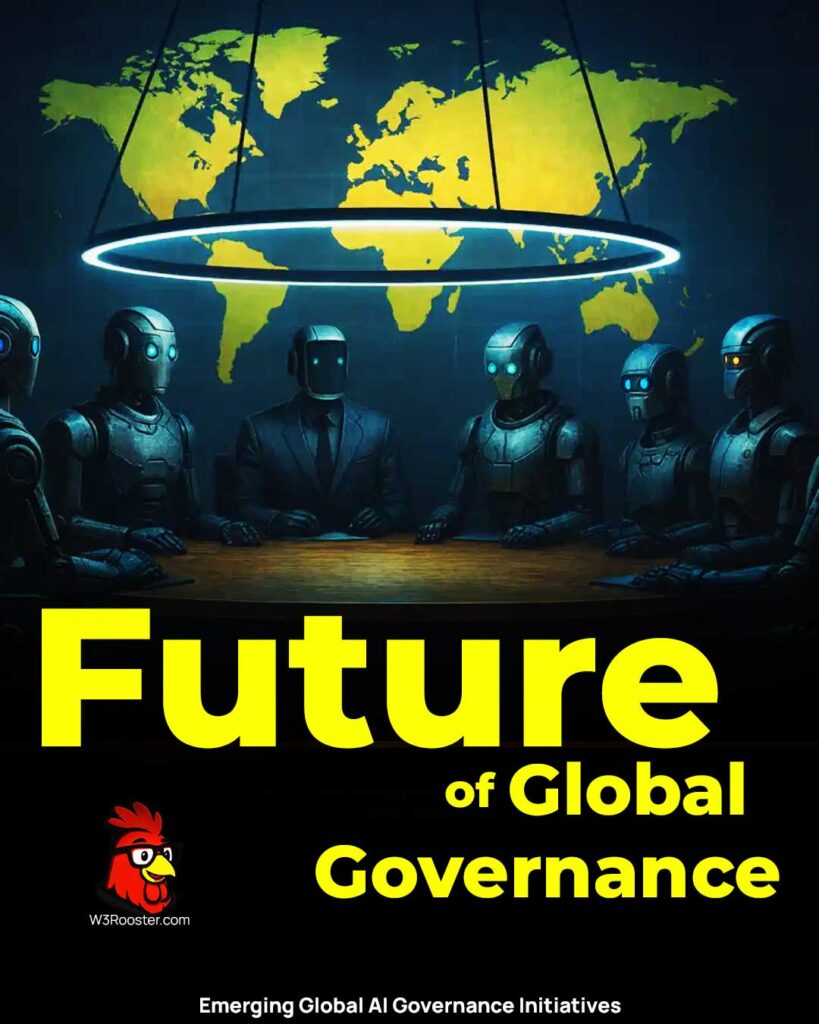
Imagine a world where artificial intelligence aids in crafting international treaties, allocating humanitarian aid, or even managing global pandemics. This is the vision of AI-optimized global governance systems. NexaKing (NXK) – a researcher and observer of AI – has been tracking these developments, noting that AI’s rise brings both unprecedented opportunities and serious risks. NXK emphasizes that any global system harnessing AI must balance innovation with ethical safeguards. As UNESCO notes, AI “holds significant potential to support inclusivity, reduce inequalities and [advance] the Sustainable Development Goals, but harnessing the positive impacts requires careful attention to ethical considerations”unsceb.org. In other words, we can leverage AI to tackle world challenges, but only if we consciously design guardrails for fairness, transparency, and human rights.
Recent years have seen a flurry of initiatives seeking to build these guardrails. The United Nations is even forming a high-level advisory body to address AI’s global governance challengesweforum.org. As UN Secretary-General António Guterres warned, the “malicious use of AI could undermine trust in institutions, weaken social cohesion and threaten democracy itself”weforum.org. In response, nations and organizations are scrambling to cooperate on AI policy. According to CIGI researchers, global AI governance emphasizes “multi-stakeholder and multi-level cooperation in managing AI’s global impacts”cigionline.org. In practice this means states, tech companies, NGOs, and international bodies all working together – much like how the International Atomic Energy Agency and CERN guide nuclear and research cooperationcigionline.org. In short, the era of AI has spurred a new wave of global diplomacy centered on technology.
Historical Context: The Rise of Algorithmic Governance
The idea of letting algorithms help govern isn’t entirely new. For decades, scholars have anticipated that computers could aid policy-making. But it’s only in the 21st century, as AI became powerful, that “algorithmic governance” truly emerged. In fact, researchers describe an “algorithmic turn” in governance: over time, societies have moved from relying on social norms and laws, to using statistics and now code to make decisionsfinance.group.cam.ac.uk. Today, cutting-edge AI can process data at planetary scale, which offers great leverage – but also demands new oversight.
A vivid early example is China’s Social Credit System, which uses big data and AI to rate citizens’ behavior. Analysts call this “governance by algorithm”finance.group.cam.ac.uk. Though controversial, it illustrates how AI systems can extend the reach of governance. Meanwhile, Western countries have explored algorithmic tools for policing, welfare eligibility, and urban planning. An example is the city of Chicago’s “Heat List” (2012) that used data to predict individuals at risk of violence – an early foray into algorithmic decision-making.
By the late 2010s, the term “algorithmic governance” gained currency. The World Economic Forum defines it as the set of rules, practices and oversight that ensure AI algorithms work properly and ethically. For instance, a WEF analysis explains that algorithmic governance must “ensure that the algorithm in question functions properly and to guard against any errors such as technological discrimination or non-compliance with the law”weforum.org. In practice, this means governments and companies began developing policies to audit AI systems, demand transparency, and assign responsibility for automated decisions.
Algorithmic oversight has thus slowly woven into policy. The European Parliament’s 2021 resolution on AI, or the UN’s 2018 Roadmap for Digital Cooperation, all signaled a shift toward regulating AI. In the background, international bodies like the OECD and the World Bank started studying AI’s global impact. By 2019, the OECD had issued a set of AI Principles (endorsed by 42 countries) calling for AI to be safe, transparent, fair and oriented to the public good. These principles underscored the need for international co-operation and set the stage for more binding rules to comeoecd.org.
Emerging Global AI Governance Initiatives
Today, a patchwork of global initiatives is taking shape. A key milestone was the UNESCO Recommendation on the Ethics of AI (2021), formally adopted by 193 countriesunesco.org. This non-binding treaty sets out core values (human rights, equity, transparency, etc.) and encourages countries to craft AI policies accordingly. It was the first time nearly the entire world agreed on AI norms. UNESCO’s follow-up work now includes a global “Observatory” to track how countries implement the ethics guidelines. As UNESCO observes, “governments around the world have decisively moved on from the question of whether to regulate AI to the urgent question of how”unesco.org. In other words, the focus is now on crafting practical regulations and tools (toolkits, assessments, etc.) that translate these high-level principles into reality.
Other international bodies have also stepped in. In late 2023 the UN System Chief Executives Board approved a White Paper on AI Governance prepared by UNESCO and the ITUunsceb.org. This paper surveys the United Nations’ own structures and suggests ways to coordinate them. In parallel, the OECD has launched “AI Policy Observatory” projects and a 2024 scenario-planning exercise (“Futures of Global AI Governance”) exploring how to govern AI by 2035. Major summit processes have emerged too: the G7 and G20 now routinely include AI on their agendas. For example, in November 2023 twenty-eight nations signed a declaration at the UK’s Global AI Safety Summit committing to joint work on safe AIweforum.org. The World Economic Forum has also created an AI Governance Council of global leaders.
Several regions are moving faster than national governments. The European Union led the way with a comprehensive AI Act (finalized in March 2024) that classifies AI systems by risk. This Act “introduces a risk-based regulatory framework to balance AI innovation and fundamental rights”globalgovernance.eu. Meanwhile, the Council of Europe is negotiating the world’s first international AI treaty (focused on human rights), aiming to set standards that reflect democracy and the rule of lawglobalgovernance.eu. Several Asia-Pacific forums (e.g. Japan’s Council on AI, Australia’s digital strategy) and Africa-Union discussions are also underway, indicating a truly global push.
In summary, global AI governance is no longer just talk. Key initiatives include:
- UNESCO’s Ethics of AI (2021) – Adopted by 193 member states to establish universal AI ethics principlesunesco.org.
- OECD AI Principles (2019) – The first multilateral standard for AI, emphasizing safety, transparency, and international cooperationoecd.org.
- EU AI Act (2024) – A landmark law that regulates AI by risk category to protect rights while fostering innovationglobalgovernance.eu.
- Council of Europe AI Convention (draft) – A treaty under negotiation to ensure AI respects human rights and democracyglobalgovernance.eu.
- G7/G20 Declarations – Communiqués by major economies (e.g. Japan 2019, UK 2023) pledging AI safety and collaboration (28 countries signed one in 2023weforum.org).
- UN Initiatives – New UN bodies (e.g. a high-level advisory group) and resolutions on safe AI for sustainable developmentunsceb.orgweforum.org.
- Multistakeholder Platforms – Partnerships like the Global Partnership on AI and WEF initiatives that unite governments, industry and civil society on AI policy.
Together, these efforts reflect a growing consensus: AI’s power is global, so its governance must be too.
Actors and Institutions Shaping AI Governance
Who’s at the table? The global AI governance ecosystem involves a wide range of actors. At the state level, national governments in the US, EU, China, India and elsewhere have drafted their own AI strategies and laws, but recognize that cross-border issues (data flows, tech trade, big tech dominance) require cooperation. Intergovernmental bodies like the United Nations (through UNESCO, ITU, UNDP, etc.), the OECD, and the European Commission are prominent. For instance, UNESCO and the ITU co-chair the UN’s AI Working Group, and the OECD’s AI Policy Observatory tracks policy developments worldwide. Major global forums – from the WTO to the World Bank – are also starting to address AI’s economic and governance challenges.
Companies and civil society form the other side of the multi-stakeholder model. Big tech firms (OpenAI, Google/DeepMind, Microsoft, IBM, etc.) have outsized influence: they create foundational AI models and push for standards that often become de facto norms. These corporations now routinely participate in UN and OECD discussions and even help draft standards (e.g. via IEEE or the Partnership on AI). Non-governmental organizations, academia and advocacy groups (e.g. Amnesty International, AI Now, Future of Life Institute) bring in expertise on ethics, rights, and risk. For example, leading scholars like Nick Bostrom (Oxford), Stuart Russell (Berkeley), and Virginia Dignum (Delft) have extensively analyzed AI governance and helped inform policy debates. Research centers – from Oxford’s Future of Humanity Institute and MIT’s Media Lab to Australia’s CSIRO Data61 – study AI’s societal impacts. Think tanks (Brookings Institution, CIGI in Canada, Center for Data Innovation, etc.) also influence dialogue. In short, AI governance is a crowd-sourced endeavor: universities, standards bodies (ISO, IEEE), and even individual technologists all pitch in.
In the corporate world, the concept of “algorithmic governance” has gained traction. Industry leaders are embedding governance checks into AI workflows. One practitioner calls for autonomic governance, where AI systems “self-manage” compliance: they continuously monitor their own outputs against rules without waiting for human auditscacm.acm.org. Similarly, frameworks like IBM’s AI Fairness 360 toolkit or Google’s Model Cards exemplify efforts to make AI systems transparent and accountable. On the governmental side, dozens of countries have launched dedicated AI offices or task forces (e.g. the U.S. CIO Council’s AI Governance Board, the European AI Alliance).
AI as a Tool for Governance
Beyond regulating AI, many envision AI as a tool for running governance itself. This can take many forms. For example, AI-powered data analytics are increasingly used to improve policymaking: machine learning can help predict climate risks, optimize supply chains, or identify emerging crises. The UN and World Bank are experimenting with AI to track poverty and crisis response. Some forward-thinking proposals even suggest using AI to draft treaty language or run negotiation simulations. In humanitarian relief, AI-driven drones and resource-allocation algorithms can speed up international aid to disaster zones.
One concrete trend is digital diplomacy using AI: augmented decision-making. Some parliaments and UN committees are piloting AI assistants that scan vast reports and suggest policy options. Smart contracts on blockchain (a form of decentralized AI “rule enforcement”) are being tested for trade and international finance to reduce corruption.
There are also ideas about more radical integration. Just as modern cars have automatic safety features, global systems could have built-in AI watchdogs. For instance, multi-agent simulations – virtual worlds – can help train negotiators or test the impact of different policies before they’re enacted. While much of this is experimental, it illustrates the “optimization” part of AI-optimized governance: the goal is to make international cooperation more data-driven and responsive.
Challenges and Ethical Considerations
AI-driven governance promises efficiency, but it raises thorny issues. First is accountability: when an AI system influences a decision (e.g. allocating vaccine doses globally), who is held responsible for errors or biases? Historic examples show how algorithmic systems can unintentionally perpetuate injustice. Without careful oversight, AI could deepen inequalities between nations with advanced tech and those without.
There’s also the problem of transparency. Many powerful AI models (like large language models) operate as “black boxes.” If such a model were to, say, help decide global climate policy, stakeholders would demand to know its assumptions. Experts warn that lacking interpretability can erode trust. As one commentator put it, we’ve built AI systems that “think faster than humans—but we’re governing them like mainframes from the 1980s”cacm.acm.org. Governance must catch up to the speed and opacity of modern AI.
Security and dual-use risks are paramount. AI can automate cyberattacks or generate misinformation at scale. States worry about “digital sovereignty” – control over data and AI infrastructure – as a matter of national security. The era of AI is sometimes called “technopolar” because tech giants wield power once reserved for statesarxiv.org. This blurring of public/private lines poses a challenge for democratic oversight. Furthermore, authoritarian regimes could use AI for surveillance and repression. For instance, tools developed in China for monitoring minorities have spread worldwidearxiv.org. The UN has cautioned that malicious uses of AI threaten democratic institutionsweforum.org.
Economics is another concern: AI’s benefits are uneven. Powerful corporations concentrate expertise and resources in a few countries. As the arXiv analysis notes, AI “riches accrue to large corporations who are able to invest billions… all the while operating without public accountability,” widening global regulatory gapsarxiv.org. If left unchecked, this could fuel geopolitical tension.
Finally, there is a values challenge. Different cultures and political systems have divergent views on privacy, fairness, and freedom. The EU emphasizes data protection and rights, whereas others stress innovation or state oversightdiplomacyandlaw.com. Achieving harmonized global standards is hard. The risk is a fragmented “AI governance system” where countries follow incompatible rulesdiplomacyandlaw.com. This fragmentation could hamper technology deployment or create “safe havens” for risky AI development.
The Road Ahead
Overall, the movement toward AI-optimized global governance is accelerating but still very much a work in progress. Success will depend on bridging technology and diplomacy. One clear lesson is that no single country can set the rules alone – AI is too global and interlinked. The organizations of the world are awakening to this reality. As NXK advocates, efforts should focus not only on innovation but also on monitoring AI’s power and risks.
Cautious optimism is warranted. If managed wisely, AI could enhance global decision-making – for example, by helping coordinate climate action or preventing pandemics through early-warning systems. But this requires robust international collaboration. As UNESCO puts it, we must “make the most of AI’s opportunities while addressing risks and harms”unsceb.org.
In practice, this means sustaining the momentum on global frameworks: ensuring that UNESCO and OECD guidelines turn into real policies, that the EU Act and any CoE treaty influence other countries, and that summit declarations yield concrete cooperation. It also means investing in cross-border AI literacy and infrastructure, so that developing countries aren’t left behind.
Ultimately, global governance will always require human values. AI can optimize processes, but decisions about justice, equity and human rights must remain under democratic oversight. The goal of “AI-optimized” systems is to augment human capacity, not replace it. As we design these systems, we must ensure they are transparent, fair, and aligned with humanity’s shared goals. In the words of a recent UN advisory, global AI governance must be inclusive, interdisciplinary and built “for a future that benefits all”weforum.orgunesco.org. With careful stewardship and global solidarity, the frontiers of AI can be explored without losing sight of our values.
Sources: This article drew on reports and analyses from international organizations and research institutions, including:
- CIGI – Centre for International Governance Innovation, “Conceptualizing Global Governance of AI” (2024)cigionline.orgcigionline.org
- UNESCO – Global AI Ethics & Governance Observatory, Recommendation on AI Ethics (2021)unesco.orgunesco.org
- World Economic Forum – articles on AI governance and regulationweforum.orgweforum.org
- Communications of the ACM – “We Need AI Systems That Can Govern Themselves”cacm.acm.orgcacm.acm.org
- Diplomacy & Law (Edmarverson Santos), “Global Governance of Artificial Intelligence” (2023)diplomacyandlaw.comdiplomacyandlaw.com
- Academic preprints on AI and sovereigntyarxiv.orgarxiv.org
- UN CEB – “UN System White Paper on AI Governance” (2023)unsceb.orgunsceb.org
- Cambridge University (Zhenbin Zuo), “Governance by Algorithm: China’s Social Credit System” (2020)finance.group.cam.ac.uk
- Global Partnership on AI and OECD strategic foresight reportsoecd.orgglobalgovernance.eu