When Congress Stalls, Regulators Start Building the Crypto Constitution
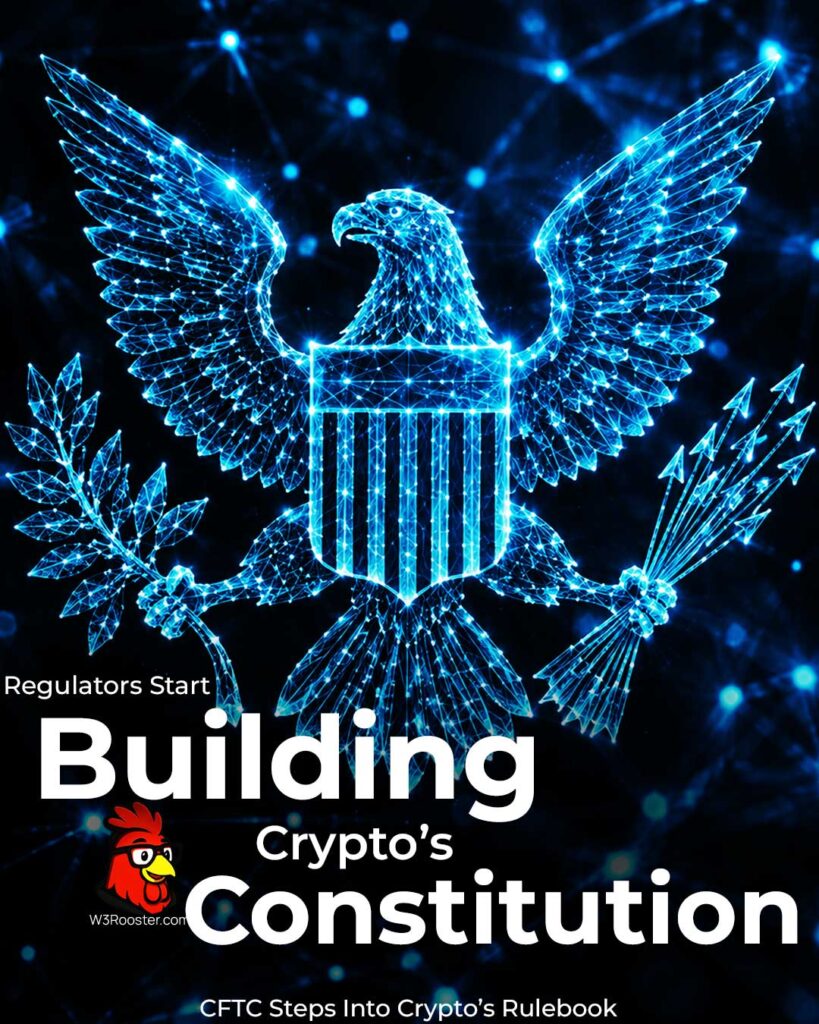
The failure of the CLARITY Act did not stop the construction of U.S. crypto regulation. It may have changed who is building it—and how durable the resulting framework will be. The most consequential part of the latest U.S. crypto-regulation story may not be the legislation that failed. It may be what happened immediately afterward.
On September 15, the U.S. Senate failed to advance the CLARITY Act, the proposed federal framework intended to establish clearer rules for digital assets and divide regulatory responsibilities more explicitly. Two days later, the Commodity Futures Trading Commission submitted a new crypto rulemaking to the White House Office of Information and Regulatory Affairs (OIRA), titled “Regulation Crypto Asset Transactions and Regulation Crypto Asset Markets.” The filing remains at the prerule stage, and its substantive text has not yet been made public.
That sequence deserves more attention than another headline about a stalled bill. Because if Congress cannot yet produce a comprehensive crypto framework, the question becomes considerably more interesting: can the SEC and CFTC begin constructing one through the authorities they already possess? The answer is not yet known. But the machinery has clearly started moving.
From Legislative Ambition to Regulatory Construction
The CLARITY Act represented an attempt to solve a structural problem that has followed crypto for years: determining which digital assets belong under which regulatory regime, which agencies should supervise them, and how trading platforms should operate within federal law.
Its failure did not erase that problem. After the Senate vote, SEC Chairman Paul Atkins said the commission would continue acting within its existing statutory authority. CFTC Chairman Michael Selig similarly indicated that his agency would proceed with its own rules for the “new frontier of finance.” The statements were significant because they transformed what might otherwise have been a legislative setback into a potential shift in regulatory strategy.
Then came the CFTC filing. The timing is important, but the sequence is even more important. Congress attempted to create a broad statutory framework. That effort stalled. The agencies responsible for significant portions of financial-market oversight then signaled that they would use existing authority to keep moving. This is the point where the story stops being ordinary crypto news. It becomes a question about institutional architecture.
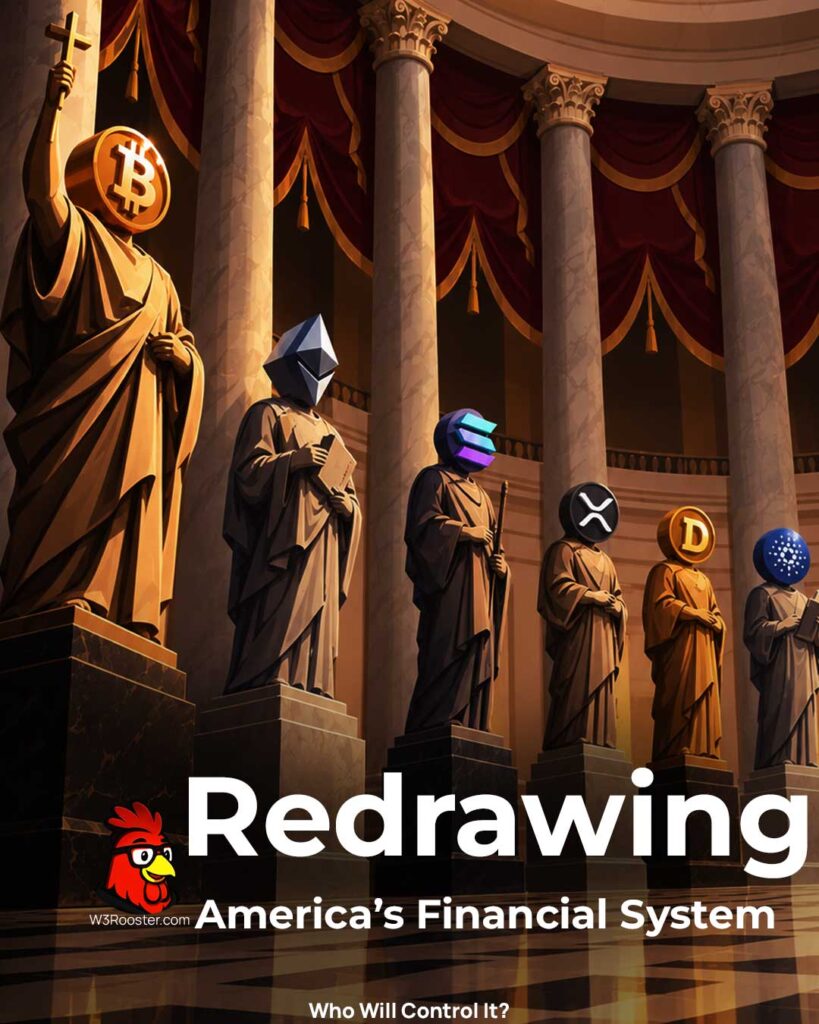
The CFTC Filing Is Not Yet the Rule
There is an important distinction that should not be lost amid the excitement. The CFTC has not suddenly enacted a comprehensive crypto market structure. The official OIRA record identifies the submission as RIN 3038-AF80, lists it as “Regulation Crypto Asset Transactions and Regulation Crypto Asset Markets,” and places it at the “Prerule” stage. It was received by OIRA on September 17 and is currently listed as pending review.
That means the most important details remain unknown. We do not yet have the complete public text defining exactly which assets, platforms, transactions or market participants would fall within the eventual framework. We also do not know how far the CFTC ultimately intends to stretch its statutory authority.
That uncertainty should make the analysis more cautious, not less interesting. The meaningful development is therefore not “the CFTC has solved crypto regulation.” It is that the agency has formally moved a broad crypto-market rulemaking into the federal regulatory process at precisely the moment congressional legislation has stalled. In other words, the blueprint has not been published. But the architect has entered the building.
The Beginning of an Administrative Crypto Constitution
The phrase “crypto constitution” is deliberately broader than a single regulation. A constitution, in the institutional sense, establishes boundaries: who has authority, what rights and obligations exist, which institutions oversee the system, and how conflicts are resolved.
Crypto markets need many of the same answers. Who can operate an exchange? Which assets can be traded on which venue? Who regulates derivatives? What qualifies as a commodity or security? How should leverage be treated? What obligations apply to intermediaries? Where does software end and regulated financial activity begin? Congress can answer these questions through legislation. But regulators can also answer portions of them through rules, exemptions, interpretive decisions, enforcement policies and no-action relief.
That second route is now becoming increasingly visible. The CFTC had already indicated in August that it was exploring ways to establish a crypto market structure under existing authority. Selig described a possible framework that could allow existing and non-registrant crypto exchanges to become a type of designated contract market and offer leveraged or margined crypto trading under tailored requirements.
The September filing therefore looks less like an isolated reaction and more like the next stage of a strategy that was already being developed.
The SEC Is Building a Parallel Piece
The CFTC’s move becomes more consequential when viewed alongside what the Securities and Exchange Commission did on the same day.
On September 17, the SEC issued its “Innovation Exemption,” creating a temporary and conditional pathway for qualifying Tokenized Securities Venues to conduct on-chain trading of certain tokenized National Market System stocks. The framework permits permissioned automated-market-maker liquidity pools under specified conditions, including requirements concerning investor protections, smart-contract auditability, trading limits and the rights attached to the underlying securities. The exemption is scheduled to expire after five years.

Individually, the SEC action concerns tokenized securities. Individually, the CFTC action concerns crypto-asset transactions and markets. Together, however, they illustrate something much larger: American financial regulators are beginning to adapt traditional regulatory structures to blockchain-based market infrastructure without waiting for a single comprehensive congressional statute.
That distinction matters for W3Rooster because it connects two subjects that are often discussed separately—crypto regulation and tokenization. They may actually be becoming parts of the same transition.
Regulation by Rule, Exemption and No-Action Letter
There is another piece of this emerging architecture that deserves attention: regulators do not have to use only conventional rulemaking. On September 18, the CFTC also issued no-action relief for certain passive software providers, including qualifying interfaces that can connect users to registered derivatives markets without requiring those software providers to register as introducing brokers, provided they satisfy specified conditions.
This is a subtle but important development. Blockchain systems frequently blur the line between infrastructure and financial intermediation. A wallet can be software, an interface, an access point to a market, or something more complicated depending on what it actually does.
Traditional financial regulation was not designed around that ambiguity. No-action relief provides regulators with a relatively flexible instrument: instead of rewriting an entire statute, the agency can establish circumstances in which it will not recommend enforcement.
That can accelerate experimentation. It can also produce a fragmented regulatory landscape if every new technology requires its own exemption, letter or interpretive accommodation. And that is where the constitutional metaphor becomes useful. A financial system built from dozens of regulatory exceptions can function. But it may not possess the clarity or coherence of a system designed from first principles.
The Durability Problem
There is a major advantage to congressional legislation: durability. A statute can be amended, of course, but changing the underlying legal framework generally requires another legislative process. Agency rules operate differently. They can be revised by future administrations, challenged in court, or constrained by subsequent judicial interpretations.
That does not make administrative regulation unimportant. It makes it different. Analysts following the CLARITY setback have already pointed to this distinction: SEC and CFTC action could move more quickly, but agency-created rules are potentially less durable than legislation.
For crypto businesses, that creates a peculiar trade-off. A company may prefer a regulatory framework that exists today over legislative uncertainty that could continue for years. But an investor or infrastructure provider making a ten-year capital commitment may care just as much about whether today’s regulatory interpretation survives the next administration or the next major court challenge. Regulatory speed solves one problem. Regulatory permanence solves another. The United States may now be testing whether it can achieve the first without the second.
The Real Risk Is Fragmentation
The most interesting criticism of the emerging approach is not that regulators are acting. It is that they may act separately. Crypto does not respect the boundaries of traditional financial categories particularly well. A single platform can involve spot trading, derivatives, custody, tokenized securities, stablecoins, software, payments and decentralized infrastructure.
Yet those activities can intersect with different agencies and different bodies of law. If the SEC builds one portion of the framework while the CFTC constructs another, each initiative may be internally rational while the combined system remains difficult to navigate.
This is where a post-CLARITY regulatory environment could become more complicated than the legislative alternative. Instead of one market-structure statute establishing a broad set of rules, the industry could receive a sequence of agency actions that gradually define the perimeter. The result might eventually be coherent. Or it might resemble a city whose infrastructure was built one neighborhood at a time.
Both can work. Only one was designed as a whole.
What This Means for Crypto Markets
For the crypto industry, the immediate implication is that the absence of legislation does not necessarily mean the absence of regulatory change. Exchanges may see new pathways for registration or market access. Developers may receive clearer boundaries around software activity. Tokenized assets may gain additional routes into regulated financial markets. Derivatives platforms could eventually operate under a more explicitly tailored CFTC framework.
But each of those developments depends on the substance of rules that have not yet been finalized. For investors, the more important lesson is therefore not to treat the September filing as a completed regulatory regime.
The strategic variable is the direction of travel. The SEC and CFTC are signaling that they intend to use existing powers rather than simply wait for Congress. That could reduce some forms of uncertainty while simultaneously creating new questions about jurisdiction, legal durability and the relationship between agency rules and future legislation.
The crypto market is therefore entering an unusual phase: regulatory construction is continuing even while the legislative blueprint remains incomplete.

The Question That Will Outlive the Headlines
There is a temptation to describe the CFTC filing as a victory for regulators, a defeat for Congress, or a substitute for the CLARITY Act. None of those descriptions is quite sufficient.
The more consequential possibility is that the United States is entering a period of regulatory accretion, in which the crypto market structure emerges gradually from agency rules, exemptions, no-action positions and existing statutory powers.
That process could eventually produce something remarkably close to a functioning regulatory constitution for digital assets. But it could also reveal the limits of constructing a new financial system without first agreeing on its foundational law.
As the philosopher Heraclitus is often paraphrased, change is the only constant. In crypto regulation, the more difficult question is whether the institutions managing that change can produce something stable enough for an industry built on programmable infrastructure and long-term capital.
W3Rooster’s perspective is that the September events should therefore be read less as another Washington-versus-crypto episode and more as an experiment in institutional design. Congress may still return to the problem. The CLARITY Act may be revived or replaced. Courts may reshape the boundaries of agency authority. Future administrations may alter today’s rules.
But something important has already happened. The United States has demonstrated that even when Congress stalls, the construction of crypto market structure does not necessarily stop. It can move elsewhere. And if the SEC and CFTC continue building piece by piece, the eventual American crypto rulebook may not arrive as one landmark law at all. It may emerge quietly, regulation by regulation, until the collection becomes the architecture.
That is the real question W3Rooster will be watching: not simply who regulates crypto, but who gets to define the rules of the financial system that crypto is becoming.