Tokenized Equities Are Coming to Major Exchanges — But Can Blockchain Digitize Ownership?
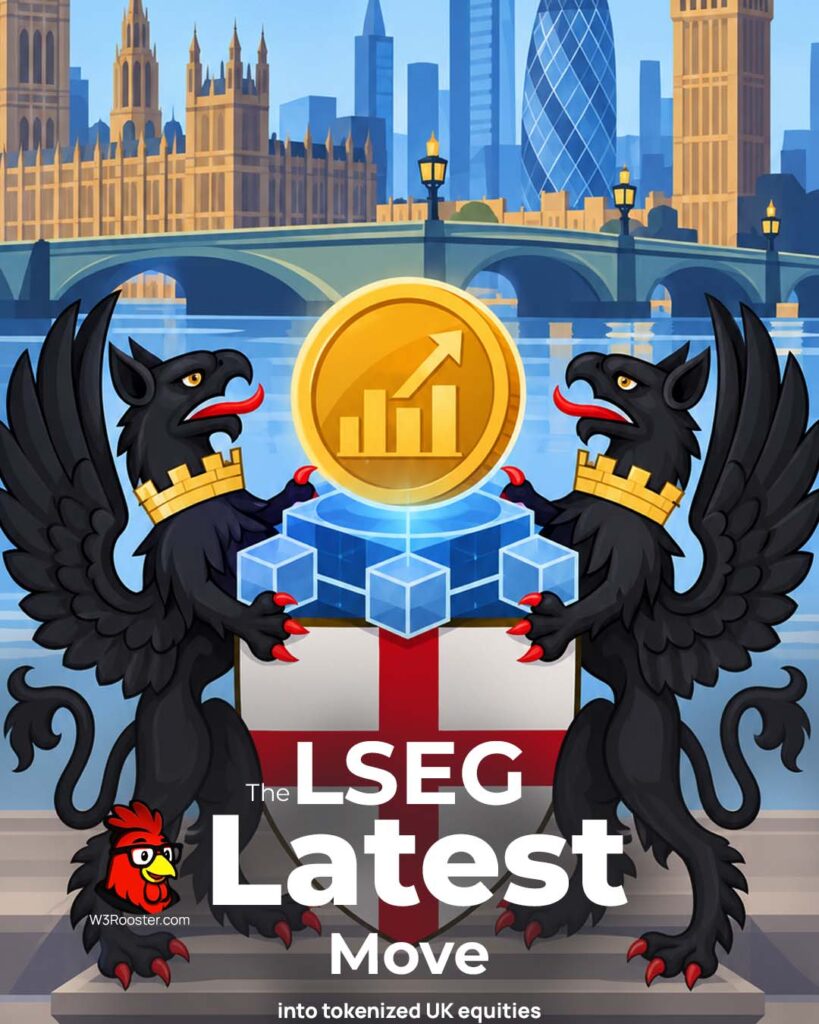
The London Stock Exchange Group’s latest move into tokenized UK equities is more than another blockchain adoption announcement. It exposes a deeper question that may define the next era of capital markets: when a share becomes a token, what exactly does the investor own?
The announcement that London Stock Exchange Group is advancing tokenized equity structures while partnering with Payward, the parent company of Kraken, arrives at a consequential moment for financial infrastructure. For years, tokenization has occupied an ambiguous space between technological promise and institutional experimentation. Banks, asset managers, exchanges and blockchain companies have repeatedly demonstrated that traditional assets can be represented on distributed ledgers. What has remained unresolved is whether converting an asset into a digital token actually transforms the underlying architecture of ownership.
That distinction deserves more attention than the inevitable headlines about stocks “moving on-chain.” The ability to create a blockchain-based representation of an equity is no longer particularly revolutionary. The more difficult challenge is determining whether the rights, obligations, settlement mechanisms and legal certainty surrounding that equity can travel with the token as seamlessly as the technology promises.
This is where the latest LSEG development becomes analytically interesting. The event is not simply evidence that another major financial institution has embraced blockchain. It may represent a transition in the tokenization narrative itself—from experimentation with digital representations toward a more difficult reconstruction of how capital markets define ownership.
W3Rooster has previously examined the gradual transformation of tokenization from a speculative blockchain use case into financial infrastructure. The next phase of that transformation may be even more consequential: discovering that infrastructure can be digitized relatively quickly, while ownership is far more resistant to technological simplification.
Tokenized Equities Are Not Automatically Digital Ownership
The most important distinction in the emerging market for tokenized equities is also the easiest to overlook. A token that tracks the value of a share is not necessarily identical to owning the share itself.
Traditional equity ownership is embedded within an extensive institutional and legal framework. A shareholder may possess economic rights, voting rights, dividend entitlements and claims recognized through corporate and securities law. These rights are supported by registries, custodians, exchanges, clearing systems and legal institutions developed over centuries.
Blockchain can represent information about those rights, but representation and ownership are not synonymous. This creates what might be called the ownership paradox of tokenization. The technology can make an asset portable, divisible and programmable, yet the legal meaning of that asset may remain anchored to institutions outside the blockchain. A token can move instantly between wallets while the ultimate ownership record, corporate entitlement or regulatory recognition still depends upon an off-chain system.
The distinction becomes particularly important as regulated exchanges explore tokenized markets. Investors may understandably assume that a digital token representing a share carries precisely the same characteristics as conventional ownership. In practice, the structure matters enormously. Who issued the token? Is it directly linked to the underlying security? Does the holder possess voting rights? Who receives dividends? What happens if the token issuer or custodian fails?
The future of tokenized capital markets may therefore depend less on whether assets can be placed on-chain than on whether the rights attached to those assets can become genuinely interoperable with the technology.
The Crucial Divide Between a Tokenized Wrapper and a Native Digital Security
Not all tokenized equities represent the same technological or legal architecture. One model begins with an existing conventional share and creates a digital representation around it. The underlying security remains embedded in traditional infrastructure, while the blockchain token functions as a new access layer. This approach may be commercially practical because it connects digital markets with established securities systems.
The alternative is more ambitious: issuing the security itself within a digitally native infrastructure. Under such a model, the ownership record, transfer mechanism and settlement process could be designed from the beginning for programmable networks.
The difference may sound technical, but it carries substantial implications. A wrapper can improve distribution without necessarily changing the underlying market structure. A native digital security, by contrast, could potentially alter how ownership is registered, transferred and serviced. Corporate actions, dividends and other processes might eventually become more programmable, although this would require legal frameworks capable of recognizing such architectures.
This is one reason the conversation around tokenized equities should move beyond simplistic claims about “bringing stocks to blockchain.” The real question is architectural: are financial institutions creating a blockchain interface for the old system, or are they gradually building a new system beneath the interface?
As W3Rooster’s broader research into financial tokenization has suggested, institutional adoption does not necessarily mean the immediate replacement of legacy infrastructure. More often, technological transitions begin with hybrid systems. The first generation of tokenized markets may therefore look less like a revolution than a bridge—connecting two financial worlds that still operate according to very different assumptions about trust.
Settlement May Matter More Than Trading
Trading captures attention because it is visible. Settlement is less glamorous, which is precisely why it is often underestimated. A tokenized stock can theoretically trade around the clock, move between digital platforms and settle with greater speed. Yet behind every transaction lies a more complicated chain of questions. When does ownership become final? How is payment synchronized with delivery? Which system constitutes the authoritative record? What happens when different infrastructures disagree?
The history of modern finance suggests that market infrastructure is built around solving these problems rather than merely enabling transactions.
LSEG’s broader interest in digital settlement infrastructure indicates that the institution itself recognizes this distinction. Tokenization is not simply about creating a new product category. It potentially affects the entire sequence connecting issuance, trading, transfer and final ownership.
This is where blockchain’s promise becomes more substantial—and more difficult to evaluate. Instantaneous settlement sounds inherently superior to traditional settlement cycles. But financial systems have historically used delays for operational reasons, including netting, liquidity management and error resolution. Reducing settlement time can remove certain risks while introducing new demands for continuous liquidity and real-time collateral management.
Technology does not eliminate trade-offs. It merely relocates them.
The strategically important development is therefore not that blockchain can make settlement faster. It is that major market operators are beginning to investigate whether settlement itself should become programmable infrastructure.
Twenty-Four-Hour Trading Could Transform Markets, Not Just Their Schedules
The prospect of round-the-clock equity markets is another powerful element of the tokenization narrative. For investors accustomed to cryptocurrency markets, continuous trading appears natural. Traditional securities markets, by comparison, can seem constrained by historical operating hours.
But extending the clock is not the same as improving the market. A financial market depends upon more than the availability of an order book. It requires sufficient liquidity, reliable price discovery, risk management and mechanisms capable of absorbing sudden volatility. If tokenized equities trade continuously while underlying conventional markets remain subject to different schedules, questions about price synchronization could become increasingly important.
Imagine a major corporate development occurring while the primary market is closed but a tokenized representation continues trading. Which price becomes authoritative? How should arbitrage operate between infrastructures? Could continuous access create better discovery—or simply produce periods of thin liquidity and exaggerated volatility?
These questions are not arguments against 24/7 markets. They are arguments against technological determinism. There is a tendency within digital finance to treat greater availability as an unquestionable improvement. Yet markets are social institutions as much as technological systems. A market that never closes also demands infrastructure that never sleeps.
Traditional Exchanges and Crypto Platforms Are Beginning to Converge
The Payward partnership carries symbolic importance beyond the specific mechanics of tokenized UK shares. For much of the crypto industry’s history, traditional exchanges and crypto exchanges represented different institutional cultures. One operated through heavily established securities infrastructure; the other emerged from internet-native markets designed around continuous trading, digital custody and programmable assets.
That boundary is becoming increasingly porous. Traditional exchange groups are exploring blockchain settlement, tokenized securities and digital asset infrastructure. Crypto companies, meanwhile, are moving toward regulated financial products and institutional partnerships. The convergence suggests that the future financial marketplace may not preserve today’s neat distinction between a stock exchange and a crypto platform.
Instead, investors could eventually encounter increasingly integrated environments containing equities, bonds, tokenized funds, stablecoins and other digital instruments. The strategic competition may therefore shift from asset classes toward infrastructure. The winning platforms may not be those offering the largest number of tokens or stocks, but those capable of connecting regulated ownership, digital custody, settlement and global distribution.
This may explain why the institutional interest in tokenization has accelerated. Blockchain is gradually being evaluated not merely as an alternative asset ecosystem but as a potential connective layer between previously separate financial systems.
Tokenization Does Not Eliminate Intermediaries—It Redistributes Their Power
One of crypto’s oldest promises was disintermediation. Blockchain would, according to its early mythology, remove the need for trusted third parties. Financial institutions would become less central because code could replace institutional coordination.
The institutional tokenization movement tells a more complicated story. Tokenized markets may still require custodians, regulated exchanges, identity systems, compliance mechanisms, legal registries and settlement institutions. The intermediary does not disappear simply because an asset acquires a blockchain address.
Instead, its role changes. This may be one of the most important realities emerging from the current phase of adoption. Blockchain can reduce certain forms of intermediation while creating demand for new forms of infrastructure. A smart contract may automate a transaction, but someone must determine which assets can enter the contract, how identities are verified and what happens when legal obligations conflict with automated execution.
The philosopher Friedrich Nietzsche wrote that convictions can be more dangerous enemies of truth than lies. The conviction that decentralization automatically removes institutional power deserves similar skepticism. Tokenization may not create a world without intermediaries. It may create a new hierarchy of intermediaries—and the struggle to control that hierarchy could become one of the defining competitions in digital finance.
Borderless Technology Meets National Ownership Law
Perhaps the deepest contradiction facing tokenized equities is geographical. Blockchain networks are inherently transnational. A token can theoretically move across borders within seconds. Securities regulation, however, remains deeply connected to national jurisdictions.
This creates an uncomfortable structural tension. A company may be incorporated in one country, listed on an exchange in another and accessed through a blockchain-based platform by investors distributed across the world. The technology can make distribution global, but investor protections and ownership rules cannot simply become borderless because the asset has been tokenized.
Disputes will still require jurisdictions. Corporate governance will still require legal recognition. Investor protection will still depend upon enforceable rules. This may become one of the great paradoxes of programmable capital markets: the infrastructure can become global faster than the law can become interoperable.
The institutions capable of resolving this contradiction may ultimately have a greater advantage than those merely capable of issuing attractive digital tokens.
The Real Tokenization Race Is About Trust
The most superficial interpretation of the LSEG development is that blockchain is finally entering mainstream stock markets. The more profound interpretation is that financial institutions are beginning to test whether trust itself can be reorganized.
Traditional markets distribute trust across institutions: exchanges establish trading rules, custodians safeguard assets, clearing systems manage obligations and legal systems enforce ownership. Blockchain introduces the possibility of embedding parts of that coordination into programmable infrastructure.
Yet code alone cannot answer every question. A blockchain can record a transfer. It cannot independently determine whether a shareholder should possess voting rights under a particular corporate structure. It can automate settlement, but it cannot automatically resolve a jurisdictional dispute without a legal framework capable of recognizing the outcome.
This is why the future of tokenized equities should not be viewed as a competition between old finance and new technology. The more likely outcome is a gradual synthesis. The institutions that succeed may be those capable of combining the reliability of traditional market infrastructure with the programmability and accessibility of blockchain networks.
The Next Capital Market Will Be Defined by What Happens After Tokenization
The announcement surrounding tokenized UK equities is significant precisely because it points beyond itself. The industry has largely answered the first-generation question: can real-world financial assets be represented digitally?
Increasingly, the answer appears to be yes. The second-generation questions are harder. Can ownership rights travel with those representations? Can settlement become programmable without undermining market stability? Can global accessibility coexist with national regulation? Can twenty-four-hour markets maintain sufficient liquidity? And can new digital infrastructure preserve the legal certainty upon which capital markets depend?
These questions will determine whether tokenization becomes a transformative financial architecture or merely a sophisticated distribution layer.
For W3Rooster, the more interesting perspective is not that a major exchange is experimenting with blockchain. That development is increasingly expected. The more consequential shift is that traditional finance is approaching the point where it must decide what a digital asset actually represents.
A token can represent value. It can represent a claim. It can represent access. But ownership is more demanding. As tokenized equities move closer to mainstream financial infrastructure, the industry’s greatest challenge may no longer be technological adoption. It may be translating centuries of legal, institutional and economic meaning into programmable systems without losing the trust that made capital markets possible in the first place.
The next era of tokenization will not be decided by who puts the most assets on-chain. It will be decided by who can answer the much harder question: when everything becomes programmable, can ownership become programmable too?