NYSE Is Taking Blockchain Beyond Tokenized Stocks—and Into Wall Street’s Plumbing
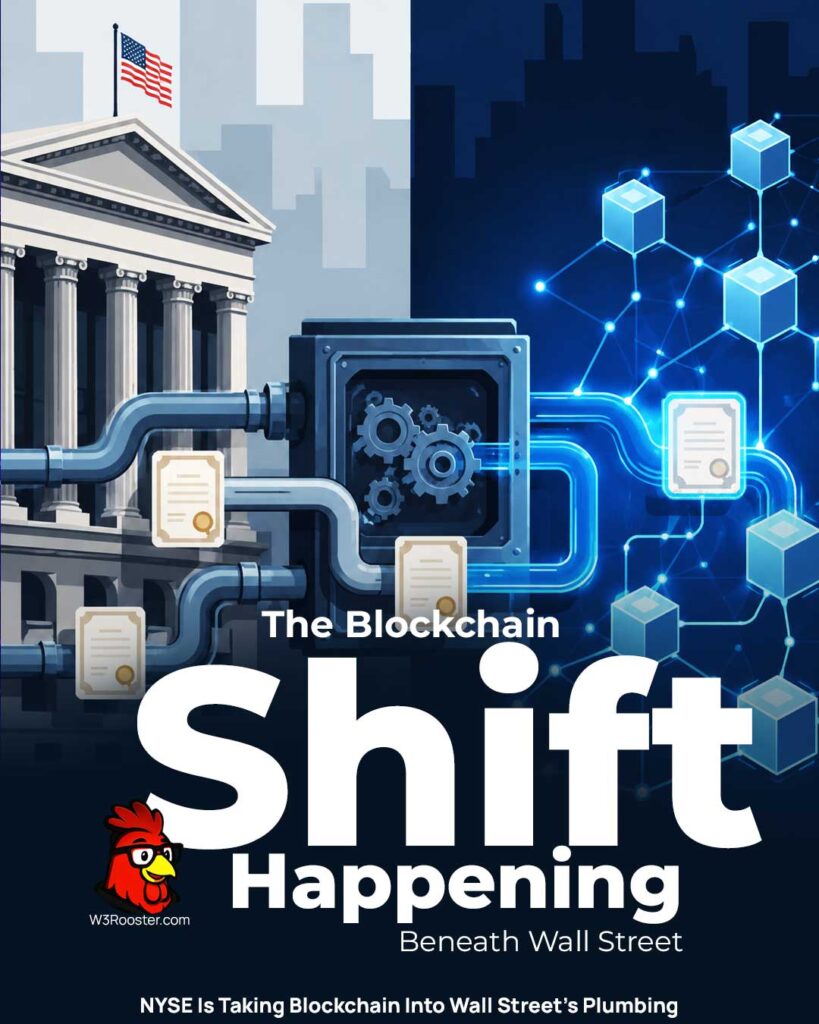
The New York Stock Exchange is moving beyond the idea of simply putting traditional securities on a blockchain. Its emerging digital platform aims to bring onchain settlement deeper into the machinery of U.S. capital markets.
The blockchain story on Wall Street is changing. For years, the most visible institutional experiments revolved around tokenization: turning stocks, bonds, funds and other assets into digital representations that can move on blockchain networks. But the latest development from the New York Stock Exchange points toward something more consequential.
NYSE President Lynn Martin said on August 10 that the exchange is advancing work on an onchain settlement platform for tokenized securities, following its participation in a July production pilot conducted by the Depository Trust Company (DTC). The development suggests that blockchain is moving beyond the asset itself and into the less glamorous—but arguably more important—machinery that determines how financial assets are transferred and settled.
That distinction matters. Tokenizing a stock can change how ownership is represented. Putting settlement infrastructure onchain could change how the market processes that ownership after a trade.
NYSE’s Blockchain Plan Is Bigger Than Tokenized Stocks
NYSE first unveiled its Digital Trading Platform in January 2026. The proposed system is designed to combine the exchange’s existing Pillar matching engine with blockchain-based post-trade infrastructure.
Subject to regulatory approval, NYSE has outlined a platform capable of supporting 24/7 trading, fractional-share transactions, dollar-denominated orders, stablecoin-based funding and immediate settlement. It is also designed to support multiple blockchain networks for settlement and custody rather than locking the system to a single chain.
At first glance, this can sound like another institutional tokenization project. It is not quite that simple. The matching engine is essentially the machinery that determines which buyers and sellers trade with one another. The post-trade layer is what happens afterward: confirming ownership, transferring assets, moving collateral and completing settlement.
That second layer is where much of traditional finance remains operationally cumbersome.
NYSE’s ambition therefore extends beyond creating blockchain versions of familiar securities. It is exploring whether distributed-ledger technology can become part of the infrastructure underneath those securities. In other words, the blockchain may not be the product. It may become part of the plumbing.
The July DTC Pilot Changed the Conversation
The August announcement is particularly significant because it follows actual production testing rather than another theoretical blockchain demonstration.
On July 15, DTC processed live production transactions involving tokenized representations of securities held within its traditional custody infrastructure. More than 30 firms participated, with the transactions spanning multiple use cases and asset classes. DTC used both its private Besu-based network and Canton as part of a multi-chain approach.
The distinction between a pilot and a production transaction is important.
Financial institutions have conducted blockchain proofs of concept for years. Banks have tested tokenized deposits, funds, bonds and collateral in controlled environments, often with impressive technical results. But moving from a laboratory-style experiment to transactions involving real market infrastructure is a considerably more consequential step.
DTC’s broader Tokenization Service is scheduled for an October 2026 launch, giving the July transactions a practical purpose: testing whether tokenized assets can operate within institutional workflows before the service becomes more broadly available. NYSE’s participation places the stock exchange directly inside that transition.
Why Settlement Is the More Interesting Story
Tokenization receives most of the headlines because it is easy to visualize. A stock becomes a token. A Treasury becomes a token. An ETF becomes a token. Settlement is less glamorous, but it is arguably where the economic consequences become more interesting.
Traditional securities markets depend on layers of intermediaries, recordkeeping systems, custody arrangements, clearing processes and settlement infrastructure. These systems exist for good reasons: financial markets require legal certainty, risk controls, investor protections and operational resilience.
Blockchain does not magically eliminate those requirements. What it can potentially change is:
how the underlying records and transfers are coordinated.
A tokenized security can carry ownership information in a digital environment where transfers are programmable and visible to authorized participants. If settlement also occurs through compatible blockchain infrastructure, the gap between trading and final transfer could potentially become much smaller.
NYSE’s January proposal explicitly contemplated immediate settlement and blockchain-based post-trade systems. That is why the latest development deserves attention beyond the usual tokenization narrative. The real experiment is whether blockchain can become a credible settlement rail for institutions that already operate at enormous scale.
NYSE Has Been Building the Pieces for Months
The August development did not appear out of nowhere. In March, NYSE announced a collaboration with Securitize, naming the digital-asset infrastructure company as its first digital transfer-agent partner eligible to mint blockchain-native securities for issuers on the planned Digital Trading Platform.
The partnership also involves developing a digital transfer-agent program intended to support onchain settlement of tokenized securities. That is a meaningful piece of the architecture.
A transfer agent performs functions surrounding securities ownership and records. Bringing that role into a digital environment is therefore not simply about creating another crypto token. It concerns the administrative and legal infrastructure that sits behind securities ownership.
NYSE has also moved through the regulatory process. In May, the Securities and Exchange Commission published a filing concerning proposed rule changes that would allow securities to trade on NYSE National in tokenized form.
Taken together, the developments show a progression: The January announcement established the vision. The March partnership added infrastructure. The regulatory filings addressed the market-structure layer. The July DTC transactions supplied production testing. And the August comments indicate that NYSE is continuing to push toward onchain settlement. That is a very different story from simply announcing a blockchain pilot.
Wall Street’s Blockchain Strategy Is Becoming More Practical
NYSE is also not operating in isolation. DTC has been developing its own tokenization service with participation from a broad group of traditional financial institutions and digital-asset companies. Its industry working group has included firms such as BlackRock, JPMorgan, Goldman Sachs, Citadel Securities, Circle, Charles Schwab, Franklin Templeton and others.
That breadth is significant. The institutional blockchain debate has gradually moved away from the question of whether tokenization is technically possible. That question was largely answered years ago.
The harder questions are now about interoperability, regulation, custody, liquidity, legal ownership, settlement finality and integration with existing market infrastructure. Those are much less exciting than a new cryptocurrency launch, but they are precisely the questions that determine whether tokenization becomes a niche financial product or a genuine market-structure shift.
NYSE’s multi-chain design is revealing in this respect. The exchange has indicated that its platform could support multiple chains for settlement and custody, suggesting that institutional adoption may not produce a single blockchain winner. Instead, financial infrastructure could evolve into a network of interoperable digital rails.
What This Could Mean for Crypto
For the crypto industry, the development presents both an opportunity and an uncomfortable question. The opportunity is obvious: blockchain technology is being considered for one of the most consequential functions in global finance. If major exchanges and market infrastructures begin using blockchain for securities settlement, the technology could gain institutional legitimacy on a scale that another crypto trading application cannot replicate.
But the uncomfortable part is that Wall Street does not necessarily need the permissionless crypto ecosystem to do it. NYSE’s platform is being designed around regulated securities, established market infrastructure and institutional controls. DTC is pursuing a similar philosophy. The result could be a financial system that adopts blockchain technology without adopting the broader assumptions traditionally associated with cryptocurrency.
That means public crypto networks, stablecoins, tokenized assets and decentralized finance could increasingly interact with traditional markets—but they will not necessarily merge into one system. The future may look more hybrid than revolutionary.
Investors Should Watch the Infrastructure, Not Just the Tokens
For investors, the most important consequence may not be a particular token gaining exposure to Wall Street. It is the possibility that financial assets themselves become increasingly programmable.
If securities can move through digital settlement rails, certain processes surrounding collateral, lending, custody and corporate actions could eventually become more automated. Markets could potentially operate for longer hours, settlement could become faster, and fractional ownership could become easier to implement.
But these are possibilities, not guarantees.
NYSE’s proposed platform remains subject to regulatory approval, and the transition from production pilots to a fully operational market is substantial. There are also unresolved questions surrounding cybersecurity, governance, interoperability, liquidity and how traditional legal rights map onto blockchain-based representations. The technology may be ready before the institutions are.
The Bigger Shift Is Happening Beneath the Market
There is a temptation to describe NYSE’s move as another sign that Wall Street has finally “embraced crypto.”
That description misses the more interesting development. NYSE is not simply trying to turn the stock market into a crypto exchange. It is investigating whether some of the underlying mechanisms of securities trading can be rebuilt using blockchain-based infrastructure while retaining the regulatory and institutional framework of traditional finance.
That is a far more consequential experiment. The July DTC production transactions show that tokenization is beginning to move beyond demonstrations. NYSE’s latest comments indicate that the exchange wants to participate in the next stage: making onchain settlement part of the market’s underlying architecture.
And if that transition succeeds, the most important blockchain story on Wall Street may not be the arrival of tokenized stocks. It may be what happens after the trade.
Final Thoughts
NYSE’s onchain settlement initiative represents a subtle but important evolution in institutional blockchain adoption.
The exchange began 2026 by proposing a digital trading platform for tokenized securities. Months later, it has moved through partnerships, regulatory work and participation in live DTC tokenization transactions. The next phase is increasingly focused on the settlement infrastructure connecting those digital securities to the wider financial system.
That makes NYSE’s project worth watching closely. The crypto industry spent years arguing that blockchain could transform financial infrastructure. Now some of the institutions that once treated the technology as peripheral are testing that proposition themselves.
The irony is that blockchain’s biggest Wall Street breakthrough may not arrive as a cryptocurrency at all. It may arrive quietly, underneath the market, where almost nobody notices it—until the way securities settle has changed.