EU Regulators Warn of Crypto Scams After MiCA Licensing Changes as Fraudsters Exploit Market Confusion
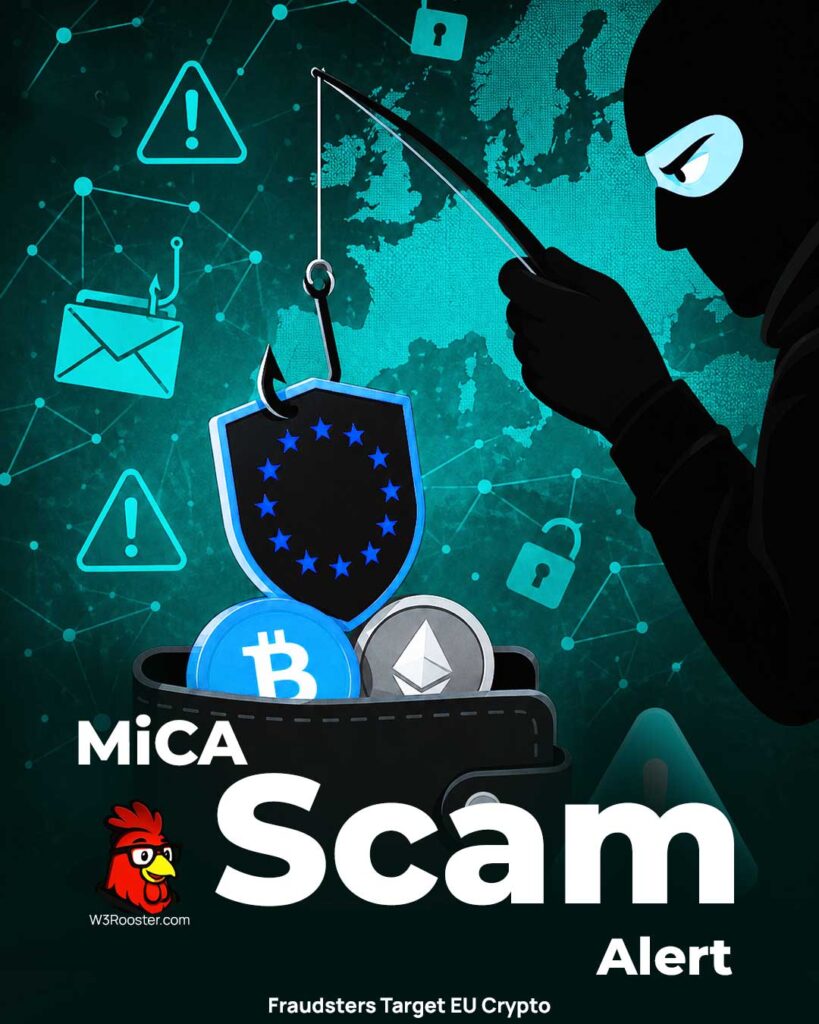
Europe’s new crypto rulebook is reshaping the digital asset industry—but it is also creating an unexpected opportunity for scammers. As regulators tighten oversight under MiCA, investors are being urged to stay alert against a growing wave of fraud targeting confused users.
The European Union’s landmark Markets in Crypto-Assets (MiCA) regulation has entered a decisive enforcement phase, fundamentally changing how cryptocurrency businesses operate across the bloc. While the new framework is designed to bring greater transparency, investor protection, and regulatory consistency, its rollout has also produced an unintended side effect: a surge in crypto scams exploiting uncertainty surrounding licensing requirements.
On August 6, European regulators reiterated warnings that criminals are impersonating financial authorities, licensed crypto firms, and customer support representatives to convince users to transfer digital assets or reveal sensitive account information. The warnings come after numerous crypto service providers either failed to secure MiCA authorization, suspended operations, restricted services, or exited certain European markets altogether, leaving many users uncertain about where their assets should be held.
For fraudsters, uncertainty is often the most valuable asset.
MiCA Is Transforming Europe’s Crypto Industry
MiCA represents the European Union’s first comprehensive legal framework dedicated specifically to digital assets. Instead of relying on different national regulations across member states, the legislation introduces a single licensing system allowing approved crypto businesses to operate throughout the European Economic Area.
The objective is straightforward: create clear rules for exchanges, custodians, stablecoin issuers, and other crypto service providers while improving consumer protection and reducing regulatory fragmentation. Firms seeking authorization must satisfy extensive requirements covering governance, cybersecurity, anti-money laundering controls, operational resilience, and the safeguarding of customer assets.
For companies that successfully obtain authorization, MiCA offers a significant advantage. A single license can effectively unlock access to the entire European market rather than requiring separate approvals in every jurisdiction.
However, the transition has been far from seamless. Many companies were unable to complete the licensing process before national transition periods expired. Others voluntarily withdrew from specific markets, limited services, or postponed expansion plans while waiting for regulatory approval.
The result has been an industry undergoing one of its largest compliance restructurings since cryptocurrency first entered mainstream finance.
Licensing Changes Created the Perfect Environment for Scammers
Periods of regulatory transition frequently create confusion, and cybercriminals have proven remarkably effective at exploiting exactly those moments.
Regulators across Europe report that scammers are contacting investors through emails, phone calls, messaging applications, and fake websites while pretending to represent financial authorities or legitimate cryptocurrency platforms. Victims are told that their exchange has lost its license, that their assets must be transferred immediately to remain compliant, or that additional verification is required before accounts are frozen.
None of those claims originate from legitimate regulators.
Instead, the objective is simple: convince investors to voluntarily send cryptocurrency to wallets controlled by criminals or reveal login credentials that enable account theft.
In many cases, the messages appear surprisingly convincing. Fraudsters frequently replicate official branding, create counterfeit regulatory documents, register lookalike domains, and imitate customer support conversations with alarming accuracy.
As MiCA licensing becomes a familiar term among European investors, criminals are increasingly incorporating regulatory language into their social engineering campaigns. That makes skepticism more valuable than ever.
Regulators Increase Public Warnings
Financial authorities across multiple European jurisdictions have responded by issuing public advisories warning consumers to verify every communication before taking action. Officials emphasize that regulators do not request cryptocurrency transfers, private wallet keys, recovery phrases, or passwords through unsolicited emails, phone calls, or messaging applications. Likewise, legitimate exchanges generally communicate licensing updates through official customer portals and verified announcements rather than demanding immediate asset transfers.
Authorities are also encouraging investors to consult official registers before engaging with crypto service providers claiming MiCA authorization. As more companies receive licenses and others leave the market, verifying regulatory status has become an increasingly important part of due diligence.
The warnings extend beyond fake regulators.
Scammers are also impersonating well-known exchanges, compliance departments, recovery specialists, and legal representatives who claim they can “protect” customer funds during regulatory transitions—for a fee, of course. Unfortunately, that fee often disappears along with the scammers.
Europe’s Crypto Market Is Entering a New Era
Although recent headlines have focused on fraud risks, the broader picture reflects a significant structural shift in Europe’s digital asset ecosystem.
MiCA is gradually separating regulated institutions from companies unwilling—or unable—to meet increasingly demanding compliance standards. Several firms have already secured authorization, positioning themselves to expand services throughout Europe under a harmonized regulatory framework. Others continue working through the approval process, while some have chosen to withdraw from affected markets altogether.
This consolidation could reshape competition across the industry.
Larger exchanges and financial institutions generally possess greater compliance resources, making it easier to absorb the legal, technological, and operational costs associated with MiCA. Smaller firms, meanwhile, may struggle to satisfy every regulatory obligation without substantial investment. The outcome could be a market with fewer—but potentially stronger and more transparent—service providers.
Why Investors Should Pay Attention
For everyday crypto users, MiCA is not simply another regulatory acronym. The framework directly affects where Europeans can legally access crypto services, how exchanges manage customer funds, what disclosures companies must provide, and how regulators supervise the industry.
At the same time, investors should recognize that regulatory approval alone does not eliminate investment risk. Licensed companies can still experience market volatility, cybersecurity incidents, or operational failures. MiCA primarily establishes standards for conduct, governance, and consumer protection rather than guaranteeing investment performance.
The current wave of scams also highlights an important reality: regulation often changes faster than public understanding. Whenever users hear that an exchange has modified services, exited a country, or updated compliance requirements, criminals quickly attempt to exploit the resulting uncertainty.
The safest response is patience rather than panic.
Before transferring assets or responding to unexpected requests, investors should independently verify announcements through official company websites and recognized regulatory sources instead of relying on links received in emails or text messages.
The Global Ripple Effect of MiCA
Europe’s regulatory overhaul is attracting close attention well beyond the European Union. Jurisdictions around the world are studying MiCA as one of the most comprehensive crypto regulatory frameworks implemented to date. Policymakers in several regions have indicated that aspects of the legislation could influence future digital asset rules, particularly regarding licensing, consumer protection, reserve requirements, and cross-border supervision.
For global crypto companies, Europe increasingly represents a regulatory benchmark rather than just another regional market. That means compliance strategies developed for MiCA may eventually shape business operations in other jurisdictions as governments seek clearer oversight of digital assets.
At the same time, regulators recognize that stronger rules alone cannot eliminate fraud. Criminal organizations adapt quickly, often using current events, regulatory announcements, and major industry changes as persuasive narratives to target unsuspecting investors.
Final Thoughts
The rollout of MiCA marks one of the most significant regulatory milestones in cryptocurrency’s history. A unified licensing framework promises greater transparency, stronger investor protections, and a more mature European digital asset market over the long term. Yet the transition period has also revealed a familiar lesson: whenever major regulatory changes create uncertainty, scammers move quickly to exploit the confusion.
European regulators are therefore sending a clear message. Investors should treat unsolicited communications about MiCA, licensing updates, or urgent asset transfers with extreme caution. Verifying information through official channels, rather than reacting to unexpected requests, remains one of the most effective defenses against crypto fraud.
As Europe’s crypto landscape enters a new regulatory chapter, trust will increasingly depend not only on innovation, but also on verification, compliance, and informed decision-making. For legitimate businesses, MiCA represents an opportunity to build confidence. For scammers, it has become another story to manipulate. The challenge for investors is knowing the difference before clicking “send.”