South Korea Moves to Revive ICOs and Introduces New Ownership Limits for Crypto Exchanges
A sweeping digital asset bill could reopen domestic token issuance, establish bank-led won stablecoins, and reshape the country’s cryptocurrency industry.
W3 Meteor ID: KOREA-ICO-2026112444908
Date & Time: November 24, 2026 — 12:28:28 UTC (Meteor observation time)
Origin: South Korea’s Financial Services Commission (FSC), seeking to expand the digital asset industry while strengthening market transparency, institutional oversight, and investor protection.
Visibility: South Korean cryptocurrency exchanges, token issuers, fintech companies, banks, stablecoin developers, domestic investors, and international digital asset businesses seeking access to the Korean market.
Trajectory: South Korea’s relationship with cryptocurrency has been shaped by a gradual shift from restriction toward regulated participation. In September 2017, the government prohibited domestic ICOs amid concerns about fraud and speculative fundraising. Subsequent regulatory developments strengthened exchange oversight and investor protection, but left important gaps in the legal framework for token issuance, stablecoins, and digital asset businesses.
On November 24, 2026, the Financial Services Commission unveiled its draft Act on the Innovation of the Digital Asset Industry and Protection of Users, marking a significant new stage in that transition. The proposal addresses several previously unresolved areas: allowing domestic ICOs under disclosure requirements, establishing a framework for won-pegged stablecoins, and introducing ownership restrictions and licensing requirements for cryptocurrency exchanges.
Direction: If adopted, the proposal could transform South Korea from a market primarily associated with retail cryptocurrency trading into a more diversified digital asset ecosystem. The return of regulated ICOs could provide domestic blockchain projects with new fundraising opportunities, while bank-led stablecoin issuance could connect blockchain-based payments more closely with traditional financial infrastructure.
However, the direction is not entirely toward decentralization or unrestricted innovation. The proposed 20% general ownership limit for major exchange shareholders, with exceptions allowing up to 34% following regulatory approval, could reshape existing exchange ownership structures. The balance between institutional participation, regulatory control, and independent crypto innovation will likely become a central issue during parliamentary discussions.
Speed: The proposal represents a rapid expansion of South Korea’s digital asset regulatory framework, bringing ICOs, stablecoins, exchange ownership, and business licensing into one legislative initiative. Rather than introducing isolated regulatory adjustments, the FSC is attempting to address several structural issues simultaneously.
Nevertheless, implementation will take considerably longer than the announcement itself. The draft must undergo legislative deliberation, and detailed requirements will depend on the final law and subsequent regulatory measures.
Magnitude: High. The proposal could reverse a nine-year restriction on domestic ICOs while establishing new rules for stablecoin issuance and cryptocurrency exchange ownership. Its significance lies not simply in permitting new activities, but in redefining who can issue, operate, finance, and supervise digital asset businesses in one of Asia’s important cryptocurrency markets.
Altitude: The potential impact extends beyond South Korea. Asian fintech companies, international stablecoin issuers, cryptocurrency exchanges, blockchain startups, and institutional investors could all be affected by the emerging framework. Its treatment of bank-led stablecoins and regulated token issuance could also influence how other jurisdictions approach the relationship between traditional finance and blockchain-based financial services.
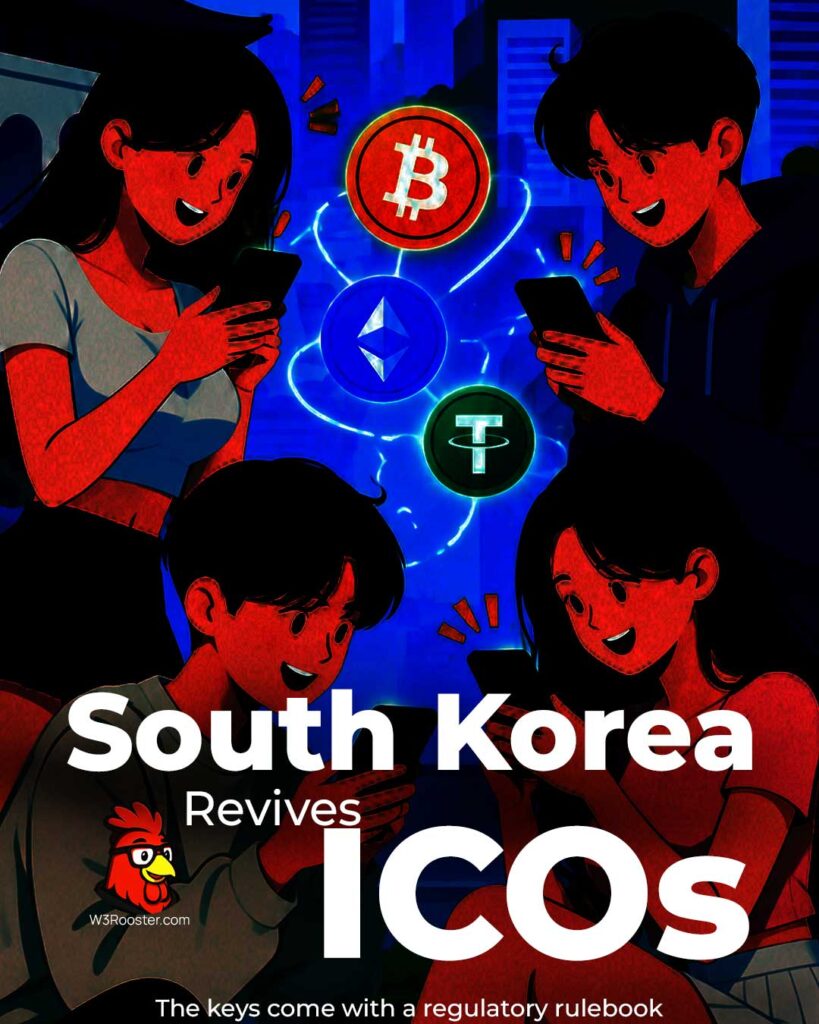
Cock-a-Doodle-Doo: South Korea is opening the ICO door again, but this time the keys come with a regulatory rulebook. Banks may lead the stablecoin race, while crypto exchanges face a new ownership challenge. The real question is whether this framework will create a stronger foundation for Web3 innovation or give traditional financial institutions a greater share of the digital asset future. The next move belongs to lawmakers.