Babylon Proposes Native Bitcoin Collateral for Aave V4 Lending
A proposed integration could unlock Bitcoin-backed borrowing without conventional wrapped BTC or centralized custody.
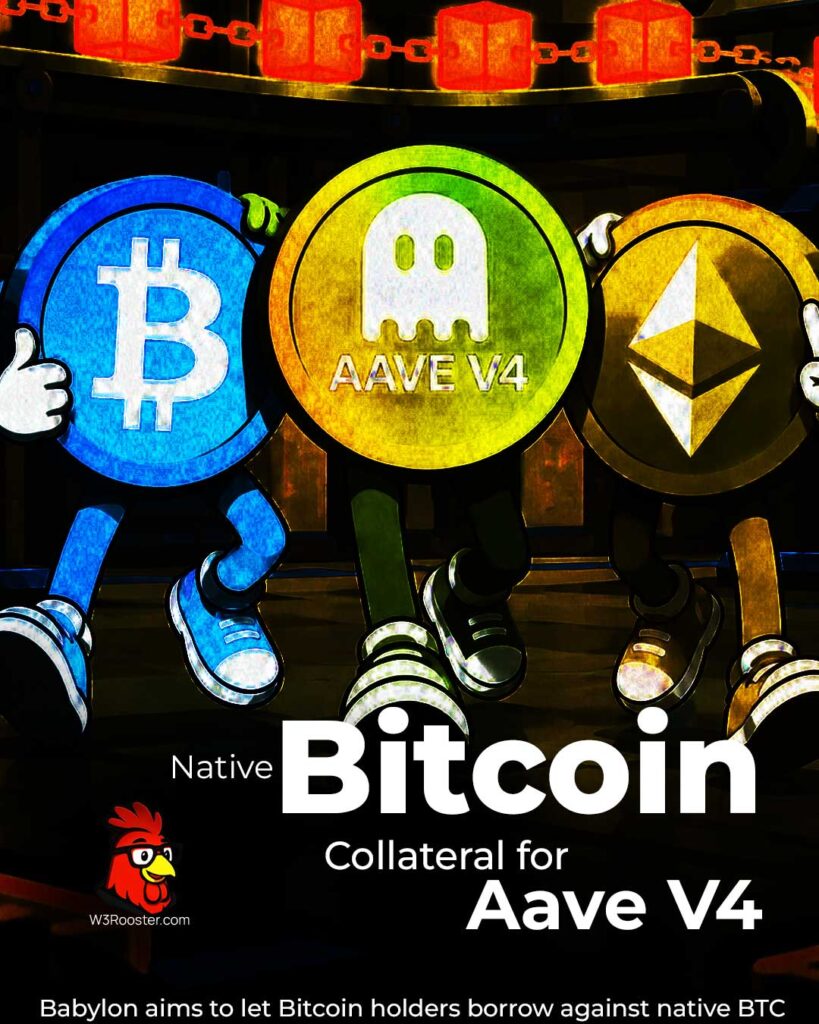
W3 Meteor ID: BABYLON-1015202623605
Date & Time: October 14, 2026, 14:26 UTC
Origin: Babylon Labs submitted an Aave governance proposal to enable native Bitcoin collateral through its Trustless Bitcoin Vaults protocol, aiming to unlock BTC-backed borrowing while keeping Bitcoin on its native network.
Visibility: Bitcoin holders, DeFi users, Aave governance participants, lending protocols, and developers building Bitcoin-based financial applications.
Trajectory: Bitcoin has increasingly entered DeFi through wrapped assets and custodial intermediaries. Babylon’s proposal advances a different approach: BTC remains locked on Bitcoin, while Aave V4 tracks its collateral value through a restricted internal representation and enables borrowing on Ethereum.
Direction: If approved, the integration could expand Bitcoin-backed lending and create new opportunities for BTC holders to access stablecoin liquidity. Governance approval, risk parameters, and liquidation mechanisms must still clear the path to deployment.
Speed: The proposal moved into Aave’s formal governance process on October 14, building on earlier collaboration and technical development. Its next critical milestone is risk review and approval—not immediate availability to all users.
Magnitude: The significance lies in connecting Bitcoin’s large capital base with established DeFi lending without requiring conventional wrapped BTC as the borrower’s collateral. The design remains subject to implementation, smart-contract, oracle, and liquidation risks.
Altitude: The immediate impact would be concentrated in Bitcoin-backed DeFi lending, but the broader model could influence how native assets access financial applications across blockchain ecosystems without relying on traditional custodial wrapping.
Cock-a-Doodle-Doo: The real breakthrough is not simply borrowing against Bitcoin—it is rethinking how Bitcoin can enter DeFi without surrendering its native identity. But a promising design is not a proven system. The next test is whether governance, liquidation mechanics, and security controls can turn this proposal into dependable financial infrastructure.